Plug-and-play commercial
Every powered model runs on US standard 110 V single-phase. No electrician install. No three-phase rewire. No four-figure panel upgrade before the first ticket.
A storefront brand built for the operator working the launch budget — fifteen 110 V kitchen appliances under one roof.
You have been burned by "commercial-grade" labels before. The residential blender that stripped its gears at month four. The Hobart quote that priced you out before you plated your first dish. The food-truck rail that needed a three-phase rewire before the breakfast service even got a permit. VBENLEM ships fifteen 110 V kitchen appliances and parts under one online storefront — built for the food-truck operator, juice-bar owner, school-cafeteria buyer, and catering side-hustler who needs commercial-tier output without the four-figure restaurant-supply outlay.
These fifteen products span nine product groups — food prep, cooking equipment, juicing, slicing, vending, concession, storage, hood parts, washing-machine pans. One model — the aluminum folding kitchen table — ships under sister-brand VEVOR; the remaining fourteen carry the VBENLEM label. Both labels appear under the same online storefront, suggesting shared sourcing on selected products.
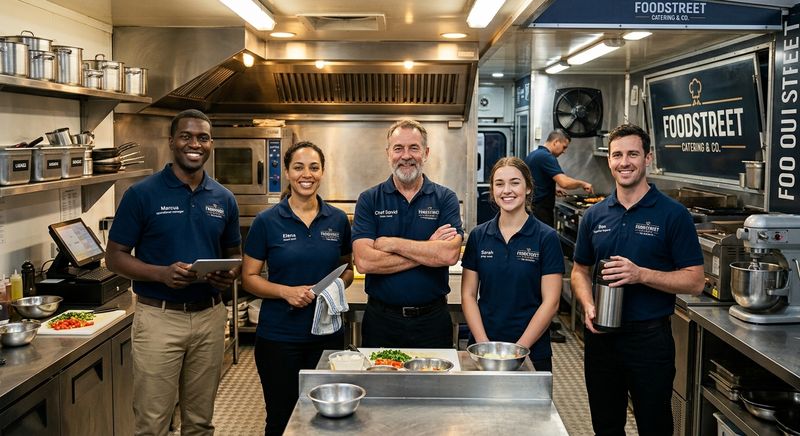
Specs sit on the label, not behind a sales rep. The 500 W food processor weighs 51 lb and runs two feed holes — built so the catering side-hustler can prep 50-guest events solo without a sous chef. The 2,800 RPM commercial juicer separates fiber through three stainless rollers and a 5-grade gear transmission — built so the juice-bar storefront covers an 8-hour shift on a single back-counter install. The 22" countertop griddle plugs into a 110 V wall outlet — built so the food-truck breakfast service starts with a plug-in, not a sub-panel rewire.
Across 4,817 verified buyer reviews on the storefront, the fifteen models average 4.20 stars — range 3.5 to 4.5 per SKU. The pricing tier sits 30-60% below the name-brand commercial supply equivalents on directly comparable specs. Operators trade purchase-price savings for slimmer authorized-service-network coverage; the replacement-parts pathway routes through retailer messaging plus a manufacturer support contact referenced on at least one SKU listing.
Bullet copy across all fifteen models does not name NSF, ETL, UL, or CE listings. If a local foodservice inspector requires a specific certification mark on the equipment label, verify the individual SKU's certification status before purchase. Warranty periods are not named in product copy — default coverage routes through the retailer's 30-day return window plus the manufacturer support contact. The duty-cycle ceiling on motor-driven SKUs sits below continuous 8-hour operation; rest the motor between heavy-load batches to keep the windings within thermal margin.
Four principles that shape what makes the cut into the set.
Every powered model runs on US standard 110 V single-phase. No electrician install. No three-phase rewire. No four-figure panel upgrade before the first ticket.
304 and 430 stainless verified on food-contact surfaces, named per SKU in the bullet copy. Wipe clean between batches; no acid pitting after a season of daily service.
Pricing 30-60% below name-brand commercial — same spec floor on most contact surfaces, smaller outlay on the launch loan. Built for the single-truck operator, not the restaurant group.
Food prep, cooking, juicing, slicing, vending, concession, storage, hood parts, washing-machine pans — one supplier, one return policy, one messaging system for parts requests.